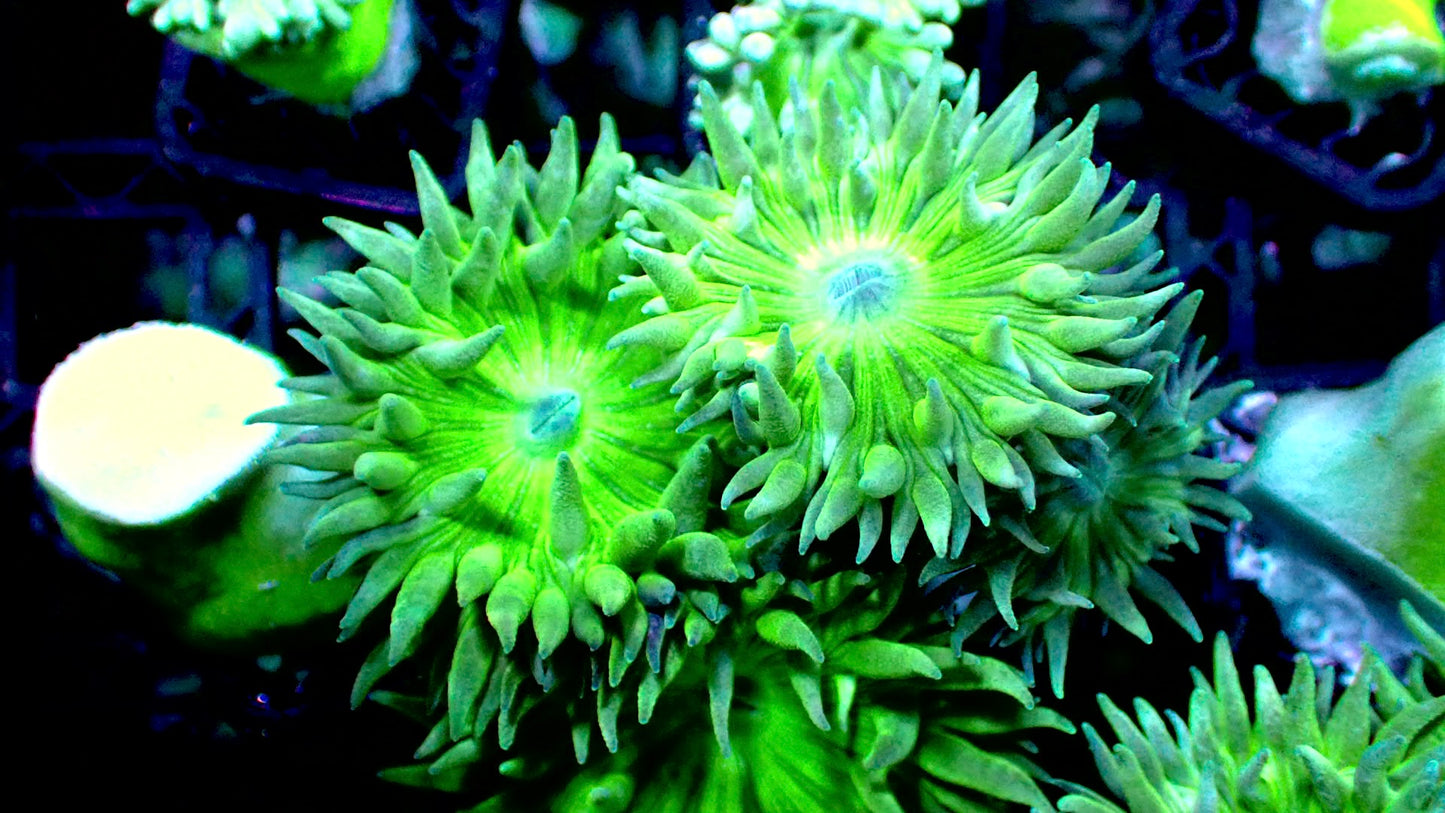
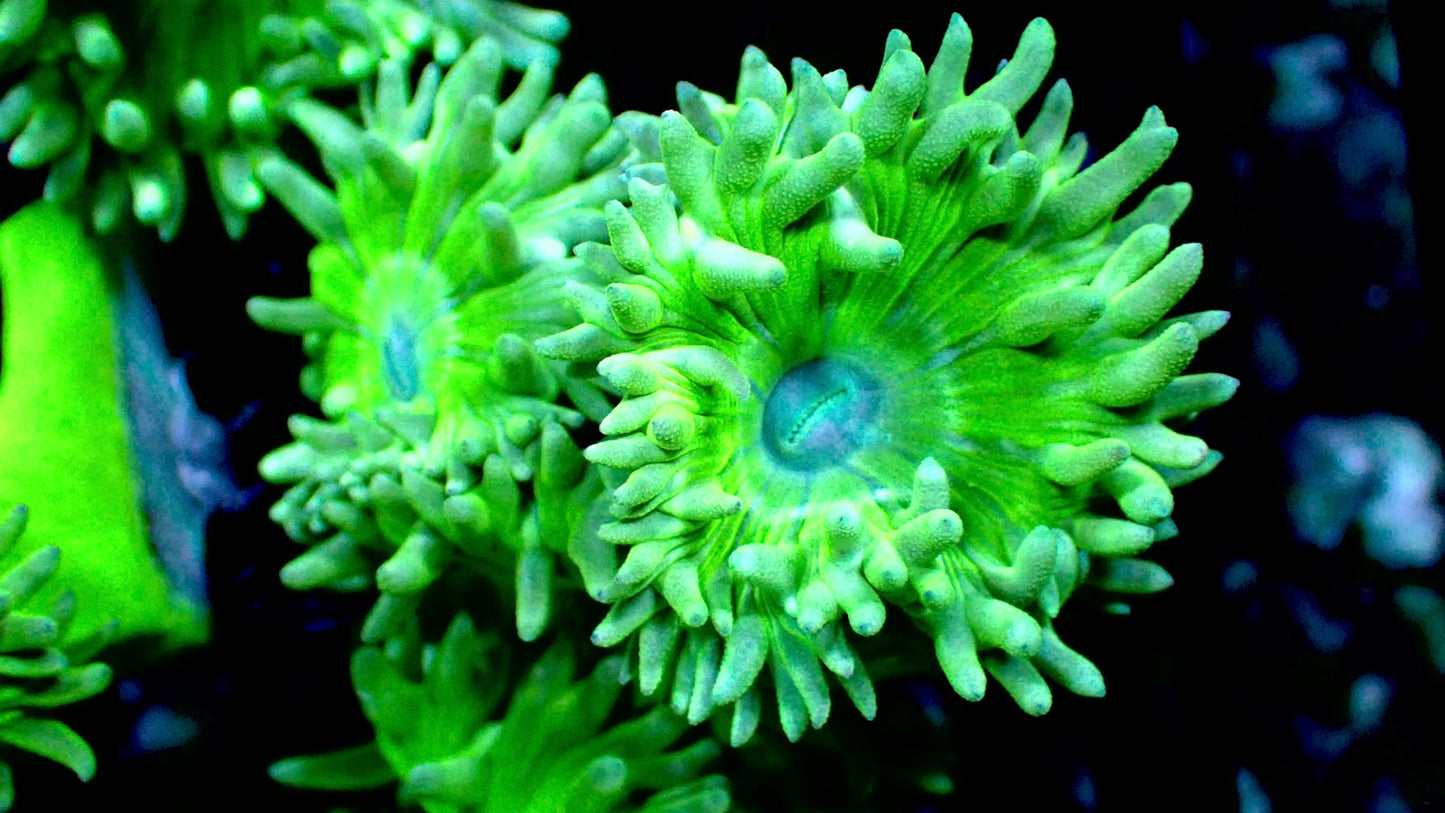
RTG Duncan coral
RTG Duncan coral
Regular price
$29.99 USD
Regular price
Sale price
$29.99 USD
Unit price
per
Shipping calculated at checkout.
Couldn't load pickup availability

Aquaculture. Photos are representative, not WYSIWYG. Your frag will be about 1".
Care
- Difficulty: Easy.
- Light: Low to moderate, about 50–120 PAR. Duncans often look better a little lower in the tank. High light keeps tentacles in and can bleach the tips.
- Flow: Low to moderate, indirect. Tentacles should extend and drift. If they look pinned to the skeleton, the flow is too strong. If detritus sits in the center, bump flow slightly.
- Placement: Lower to mid. A ledge, a cave lip, or the bottom third of the scape. Leave several inches around it. A happy duncan will overhang the plug and shade corals underneath.
- Feeding: Photosynthetic, but duncans are greedy if you offer food. Mysis, chopped shrimp, or LPS pellets a few times a week when tentacles are out will add heads faster. If you never feed, it still lives, it just grows slower.
- Temperament: Can sting. Keep off zoas, candy cane, pectinia, and other LPS. Do not put it on a mixed island with no gap.
- Water: Steady alk about 8–11 dKH. Salinity 1.025. Temp 75–78°F. They are not as alk-picky as candy cane, but big swings still stall new heads.
- Acclimate: Float, drip 20–30 minutes, place, leave it. Tentacles in for the first night is normal.
- Dip: Dip before the display. 1 cup tank water with CoralRx 1/4 cap, iodine 1–2 drops, or potassium chloride 1/4 tsp.
- Watch for: Receding tissue between heads (usually flow too low or a neighbor sting). If it never opens, it is usually light or flow, not "dead on arrival" nerves. Give it a few days lower in the tank before you panic.