RTG Mohawk Zoas
RTG Mohawk Zoas
Regular price
$29.99 USD
Regular price
Sale price
$29.99 USD
Unit price
per
Shipping calculated at checkout.
Couldn't load pickup availability

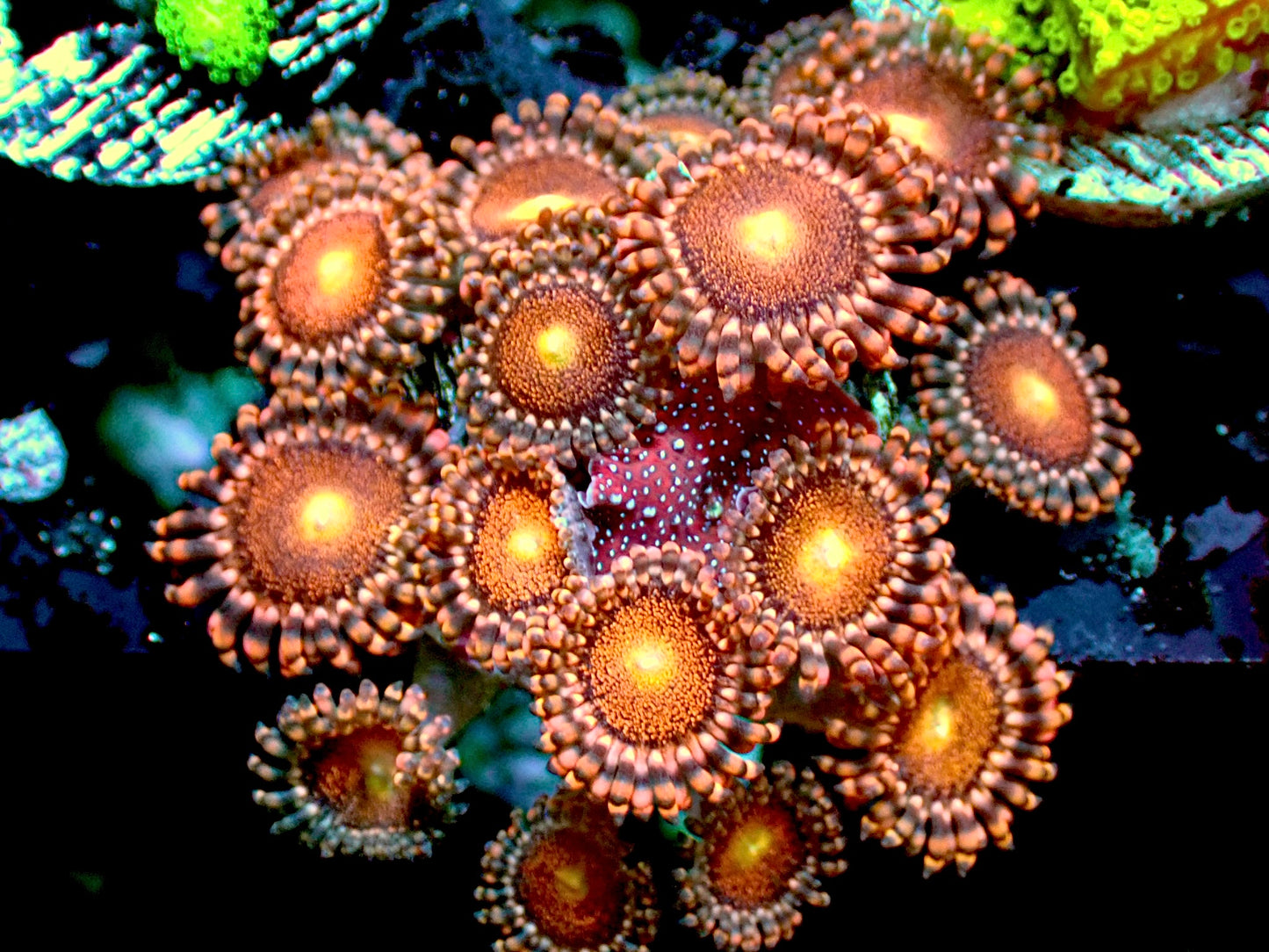
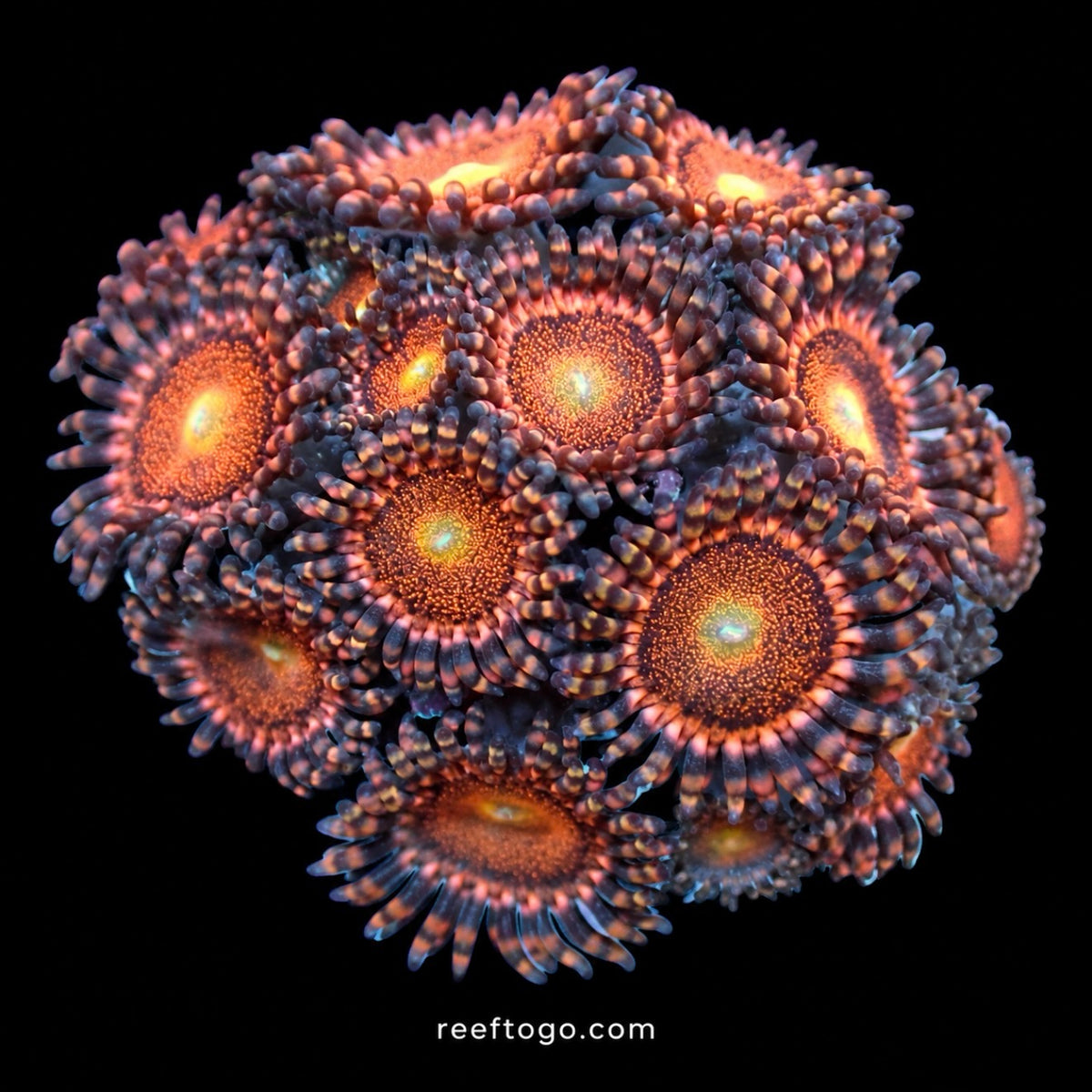
Aquaculture. Photos are representative, not WYSIWYG. Your frag will be about 1".
Care
- Difficulty: Easy. Good first named zoa.
- Light: Low to moderate, about 50–150 PAR. Too much light and they close or bleach toward tan. If they stay tight after a week, move them down or add shade.
- Flow: Low to moderate, indirect. Polyps should be fully open and swaying, not flattened. Detritus sitting in the cluster means you need a little more flow, not a powerhead pointed at them.
- Placement: Lower to mid rock, a zoa island, or a shelf of their own. Give them a patch. They will sting soft neighbors they grow into. Do not glue them onto a duncan, candy cane, or another zoa you care about.
- Feeding: They mostly run on light. You do not have to feed them. A small amount of coral food, reef roids, or amino once or twice a week can speed encrusting. Turn flow down for a few minutes so food lands in the polyps, then bring flow back.
- Temperament: Mildly aggressive. Sweeper tentacles and the mat will take over a small rock. Keep a gap from LPS and from slow encrusters you want to keep.
- Water: Stable beats perfect. Alk about 8–11 dKH and keep it from swinging. Salinity 1.025. Temp 75–78°F. Nitrates and phosphate can be detectable. Bone-dry nutrients often make zoas look pale.
- Acclimate: Float the bag, then drip or slow-add tank water for 20–30 minutes. Place them and leave them alone for a few days. Closed polyps the first night are normal.
- Dip: Dip in a coral dip before they go in the display. Follow the dip label. 1 cup tank water with CoralRx (1/4 cap), iodine (1–2 drops), or potassium chloride (1/4 tsp) is the same ratio we print on the packing slip.
- Watch for: Pests on zoas (zox, spiders, flatworms). Don't scrape zoas with dry tools. If a polyp looks melted, isolate and dip again.