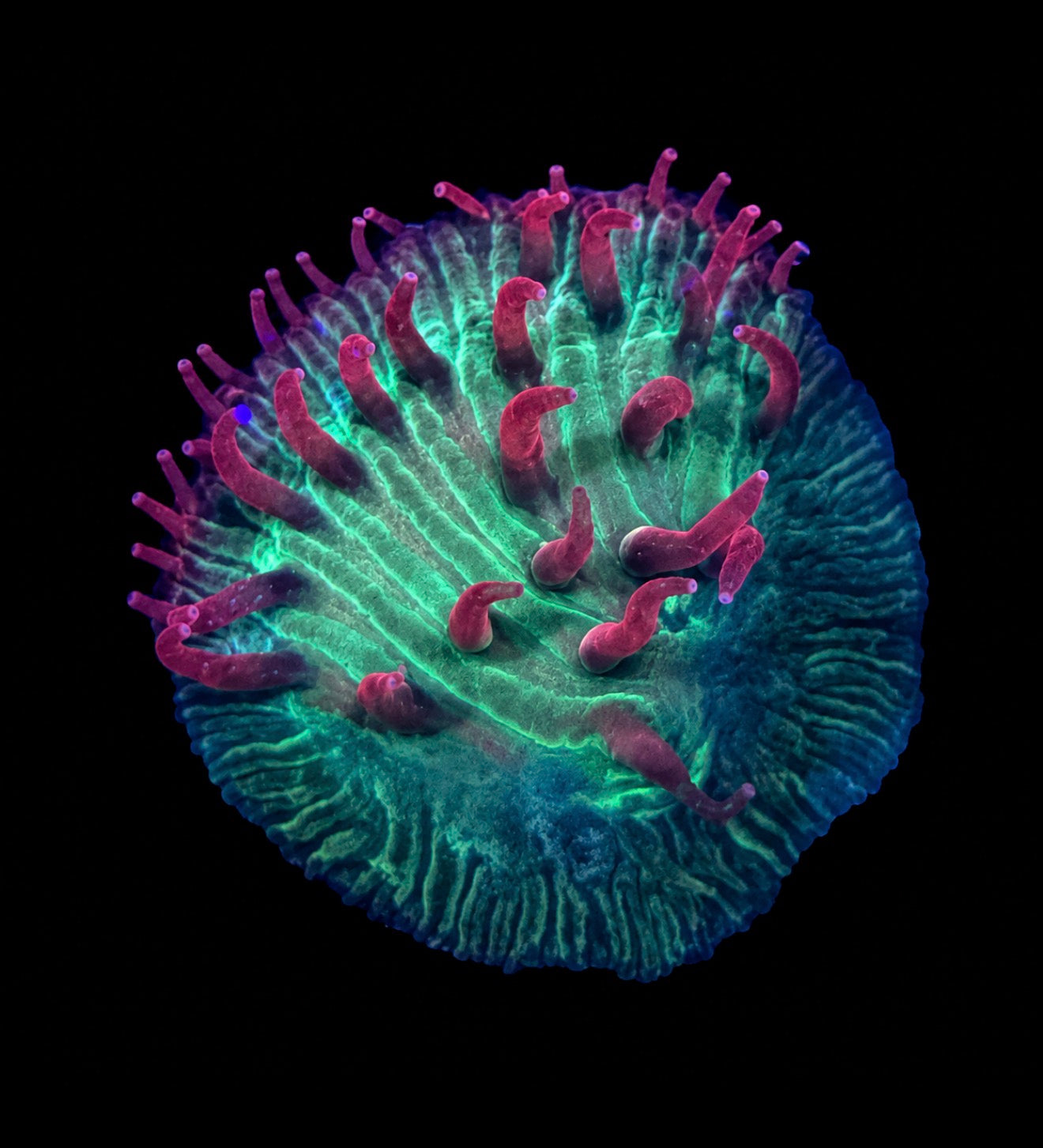
Watermelon Diaseris plate 1” frag
Watermelon Diaseris plate 1” frag
Couldn't load pickup availability
 Diaseris Coral Care Guide
Diaseris corals, often called fragile plate corals or Diaseris plate corals, are small free-living LPS corals related to Fungia/plate corals. They are usually hardy once settled, but they do not like being blasted with flow, buried in sand, or exposed to unstable reef parameters.
Care level: Easy to moderate
Temperament: Peaceful
Placement: Sand bed, low rack, or stable frag plug area
Lighting: Low to moderate
Flow: Low to moderate, indirect
Feeding: Beneficial but not required
Growth style: Encrusting/plate-like, can naturally break and regrow from fragments
Lighting
Keep Diaseris under low to moderate reef lighting, roughly 75 to 150 PAR as a safe range. They can handle brighter light if slowly acclimated, but high acro-level lighting can stress them, bleach them, or make them stay contracted.
Best placement is usually lower in the tank, especially under strong LEDs.
Flow
Give them gentle to moderate indirect flow. You want enough flow to keep detritus from sitting on the coral, but not so much that the flesh is constantly being pushed or lifted.
Too much direct flow can cause tissue irritation or recession around the edges.
Placement
Diaseris are best kept on the sand bed, a low frag rack, or a flat stable area. Do not wedge them tightly between rocks, and do not let sand cover the tissue.
They are fragile by nature. Breaking is not always fatal, and pieces can survive, but rough handling can still damage tissue and lead to decline.
Feeding
They are photosynthetic, but feeding helps with growth and recovery. Feed small foods like:
mysis, reef roids, pellets, LPS powder, small meaty coral foods.
Feed 1 to 2 times per week if you want faster growth. Turn off heavy flow for a few minutes so the food can stay on the coral.
Water Parameters
Keep parameters stable more than chasing perfect numbers.
Salinity: 1.025 to 1.026
Temperature: 76 to 79°F
Alkalinity: 8 to 9 dKH
Calcium: 400 to 450 ppm
Magnesium: 1250 to 1400 ppm
Nitrate: 5 to 15 ppm
Phosphate: 0.03 to 0.12 ppm
They usually do not love ultra-clean systems. Zero nitrate or zero phosphate can make them pale, thin, or slow to recover.
Common Problems
Tissue recession: usually from unstable alkalinity, too much direct flow, poor shipping stress, or detritus sitting on the coral.
Bleaching: often from too much light too fast.
Not opening or looking flat: can happen after shipping, moving, or sudden parameter changes. Give it stable conditions and low stress.
Damage from sand or pests: keep sand from covering the coral and watch for irritation around the edges.
Honest Vendor Note
Diaseris are not flashy like torches or scolys, but they are underrated. They are hardy, unusual, and can regrow from broken pieces, which makes them great for collectors who like oddball LPS. The biggest mistake is treating them like acros. They prefer calmer, stable conditions with moderate light and gentle flow.